See how grout, mortar, waterproofing and support fit together in the interactive grout lab.
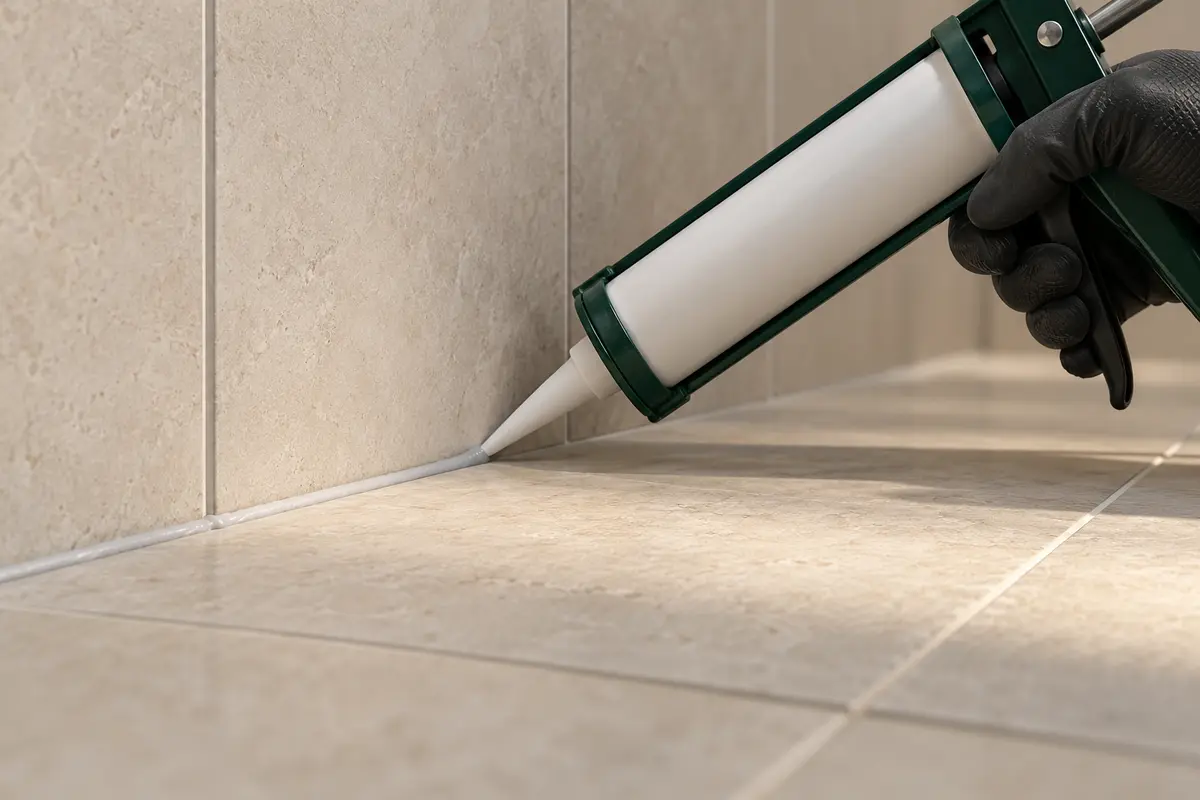
A shower-silicone inquiry should identify the connection that needs attention. Describe whether the material is separating, visibly damaged, stained or missing, and where it occurs. A wall corner, tub edge and shower-floor transition need their intended joint detail understood before the work is specified.
Separate joint maintenance from leak investigation
Flexible sealant has a different function from the grout between tiles. The sealer-versus-silicone guide explains the materials and why the word sealing can leave a quotation unclear.
Report active leaks, soft surrounding material, persistent musty odours and recurring damage. These conditions may require assessment beyond the exposed bead. Stop using a leaking shower while obtaining appropriate advice; renewing visible silicone alone cannot verify the concealed waterproofing assembly.
Ask which joints are included
Request a simple list or marked photograph of the proposed work. Include corners, changes of material and other designated connections so the quote can be checked against the room.
The contractor should identify the intended joint detail and the compatible sealant. Ask whether its colour and sheen have been reviewed beside the grout. A description such as “white bathroom caulk” is less useful than the exact product and locations.
Specify removal, preparation and protection
The scope should explain removal of existing material, preparation of the bonding surfaces and protection of tile, fittings and adjacent finishes. Ask how the work will pause if preparation reveals a condition that needs a different repair.
Include cleanup and clarify whether mould assessment, damaged backing, loose tile or waterproofing investigation is outside the sealant-maintenance scope. If another trade is needed, ask how that next step will be coordinated and approved.
Prepare access without concealing the evidence
Provide previous repair records and the names of any cleaners or coatings used. Arrange clear access to the relevant joints and tell the contractor if this is the household's only shower.
Avoid applying another bead or colour treatment before assessment. The shower-silicone tutorial explains the planning sequence, while the actual product instructions determine preparation and return-to-use timing.
Record completion and ongoing care
At handover, confirm the joints renewed, material and colour, cleanup and any outstanding concerns. Ask when shower water and cleaning are permitted and which care products are suitable.
Keep dated photographs with the invoice. If separation or moisture returns, those records give the next assessment a clearer starting point. A HAUSE inquiry helps prepare the project; it is not a confirmation of a leak diagnosis, provider availability or booked work.
HAUSE editorial · Reviewed 9 October 2026. Use the current regional instructions for the exact products and assembly.
- Commercial 100% Silicone Sealant — CUSTOM Building Products
- Essential Water Management in Tiled Showers — Schluter Systems Canada
- Mould — Health Canada