Small lines.
A big difference.
Understand the finish. See the layers.
Know what your grout actually needs.
Thoughtful guidance for better tile care, confident repairs and a home that feels considered.

A better finish starts
with a better question.
A tired-looking joint, a recurring crack and a leaking shower deserve different conversations. Find the right starting point for your home.
Care for it.
Understand staining, cleaning and surface protection before choosing a product.
Start with grout careRepair it.
Read the joint, the tile and the repair history before replacing what is visible.
Explore regroutingLook beneath it.
See how the tile, mortar, waterproofing and support each do different work.
Enter the grout lab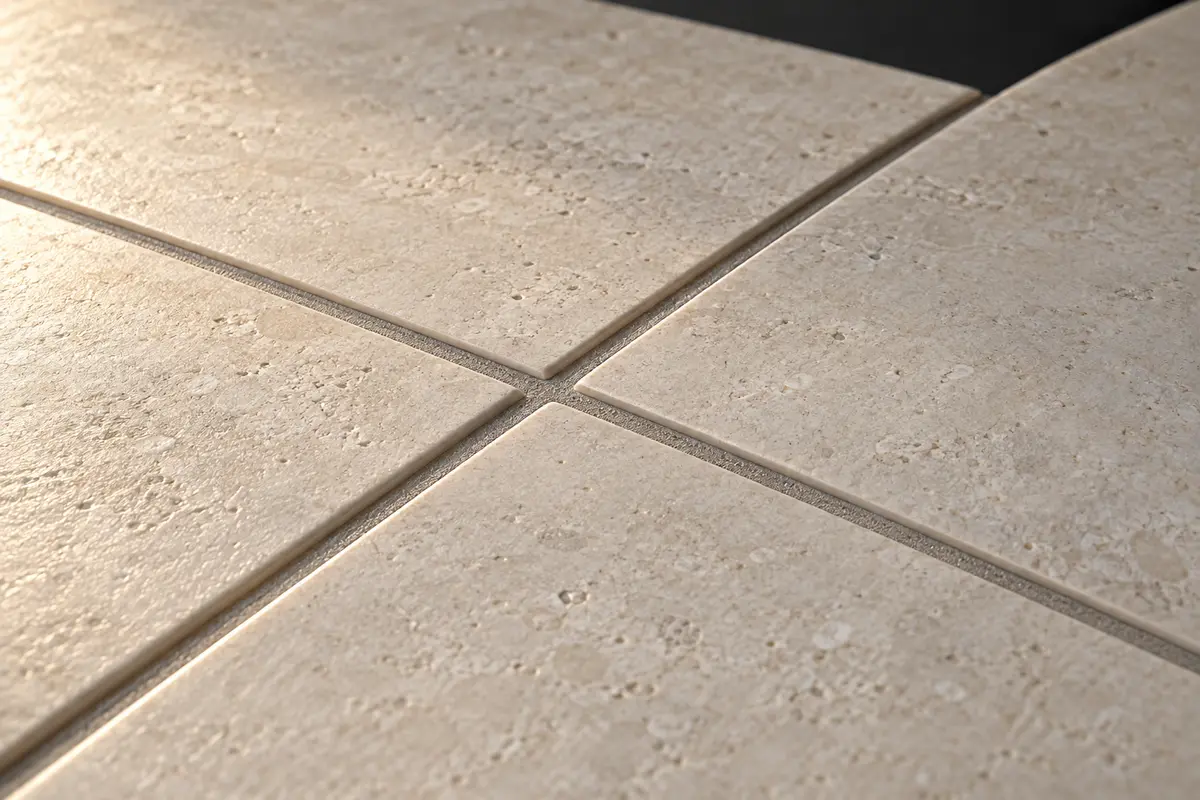
Conceptual close-up / surface and joint
There is more
to a joint than
the colour.
The visible finish is one part of an assembly. Grout fills the field joints. A separate water-management system protects the structure. Flexible joints allow specified movement.
What are you seeing?
Choose the closest visible condition. We will help you frame the next useful question.
Start with a compatible cleaning trial.
Sound grout that looks uneven may be affected by soil, residues, sealers or moisture. Identify the tile and grout before choosing a cleaner.
- Record where the colour changes and which cleaners were used.
- Try an inconspicuous area with a label-approved cleaner.
- Let it dry before judging the result.
This tool organizes visible observations. It does not inspect the installation or diagnose concealed conditions. For active leaks or soft surrounding materials, arrange an assessment before cosmetic work.
Understand the why.
Then learn the how.
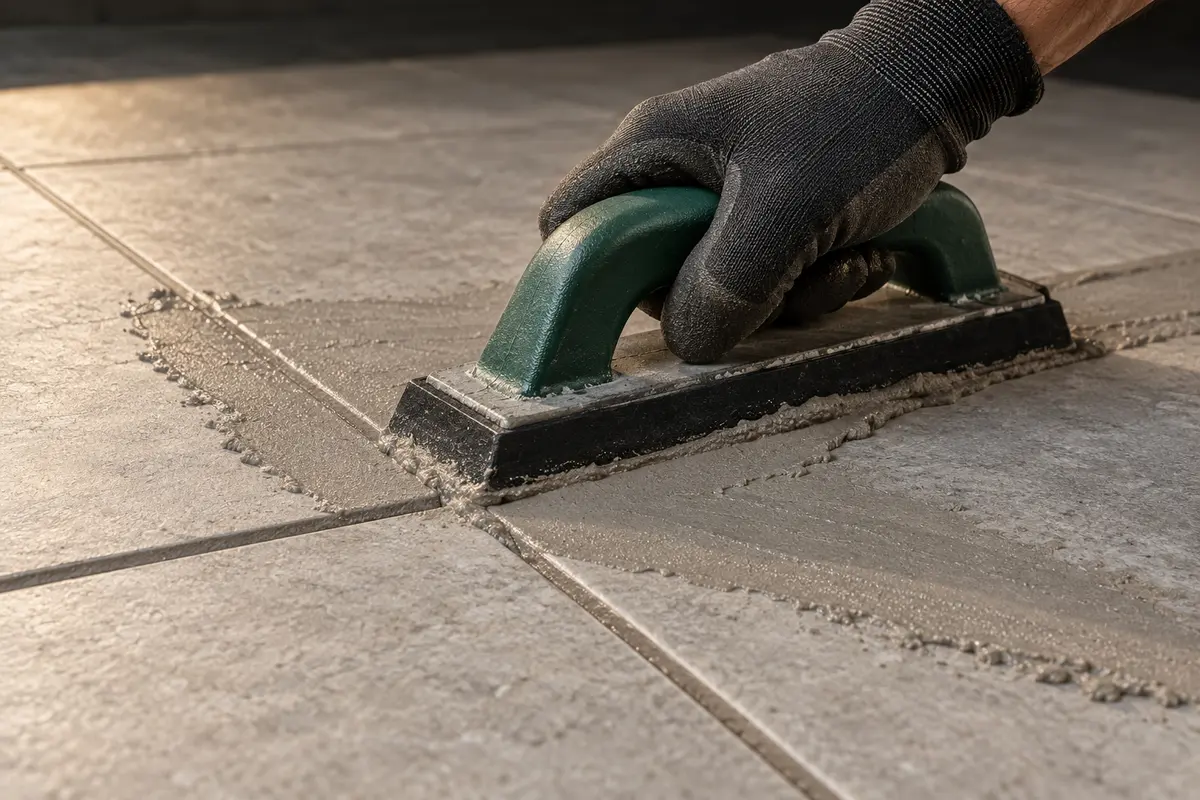
A considered approach
to regrouting.
Preparation, removal depth, material selection and a finish worth taking your time over.
Read the tutorial ↗Clean grout without damaging the tile around it
Identify the surface, start with a compatible cleaner, and remove the dirty solution. More chemical strength is not automatically a better result.
Replace tired silicone at shower corners and transitions
A flexible joint needs clean bonding faces and the right shape. A fresh bead over contaminated old silicone is not a reliable repair.
Seal grout for stain resistance
First establish whether the grout needs a sealer. When it does, clean preparation and complete removal of excess matter more than adding extra coats.
Remove grout haze with the right chemistry
Identify both the grout and the tile before choosing a haze remover. Cement haze and resin haze need different treatment.
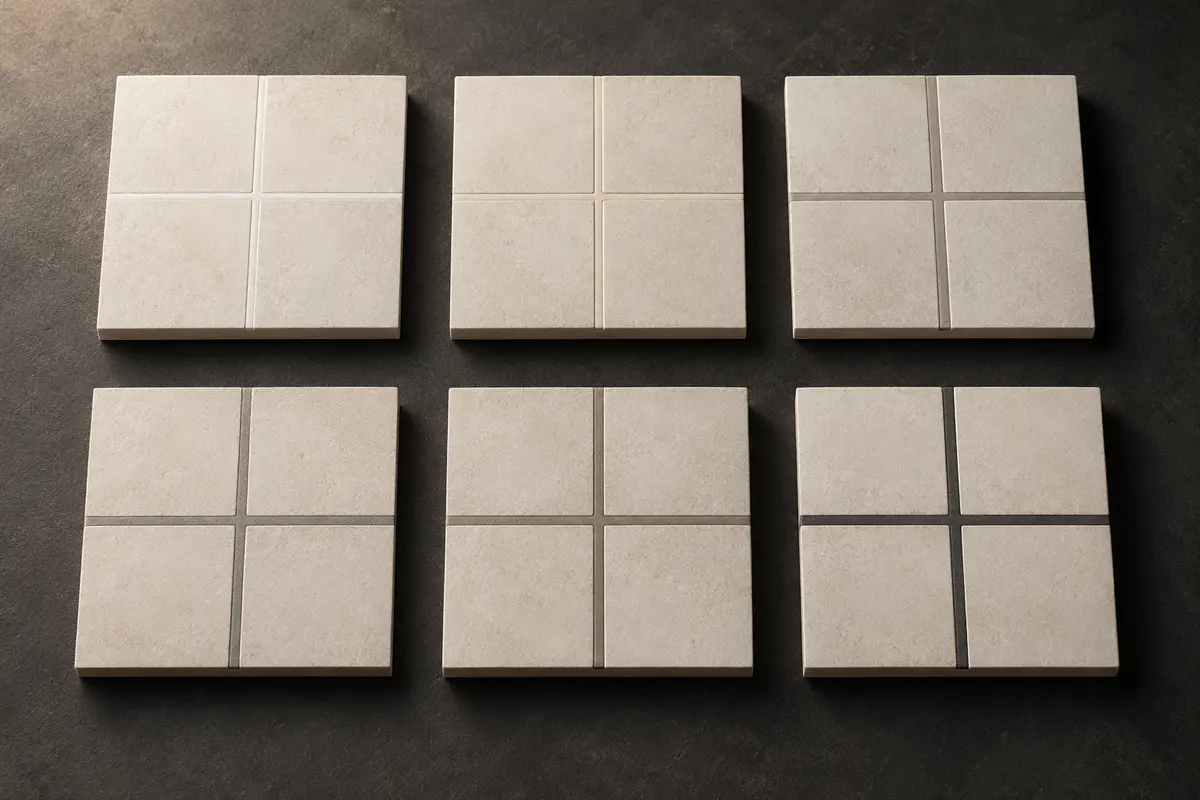
Same tile.
A different feeling.
Quietly blended or deliberately defined. Grout colour changes how you read a surface. Try a few combinations, then confirm the real material in your room.
Put a little structure
around your project.
Useful estimates, clear assumptions and a brief you can bring to the next conversation.
Grout quantity calculator
Explore how tile size, joint width, filled depth and project area change the estimated joint volume.
Calculate an approximate volumeYour project, clearly described.
Bring the room, material, visible concern and repair history into a copyable, printable project brief.
Build a project briefBefore you reach
for the grout float.
Can new grout simply go over old grout?
Do not assume so. MAPEI's guidance distinguishes cement-grout replacement from specific same-product touch-ups. Ask the installer to identify the existing grout and explain the manufacturer's preparation requirements before agreeing to an overlay.
Will sealing grout stop a shower leak?
A penetrating sealer is a stain-protection treatment. A shower also relies on its water-management assembly, including waterproofing and its drain connection. A leak needs investigation; a new-looking grout line is not proof of a watertight shower.
Does every grout need a sealer?
No. Requirements depend on the exact product. For example, CUSTOM describes Fusion Pro as requiring no sealer, while other products may allow a compatible penetrating treatment. Keep the grout name and follow its current technical sheet.
Why is there flexible material in the corners?
Tile-system sealants are designed for designated movement joints, including changes of plane. They have a different job from the grout across the tiled field. The correct material and detail depend on the installation.
Can I use a stronger homemade cleaner if ordinary cleaning fails?
Identify the tile, grout and any coatings first, then follow a compatible product's label. Never mix household chemicals. Bleach combined with other cleaners, including acids such as vinegar, can release toxic gas.
Good work starts with
a clear picture.
Turn what you have noticed into a useful project brief. Then ask HAUSE to review the available next step.