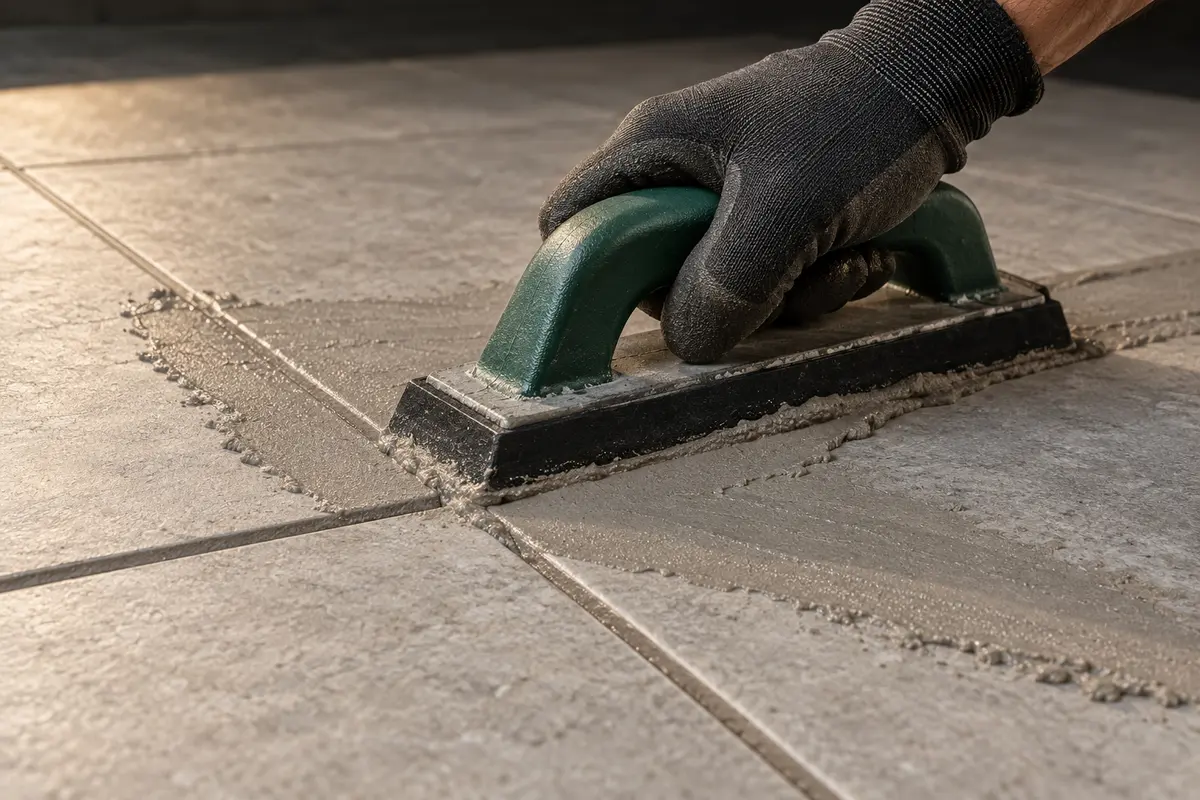
Regrouting replaces existing joint material. It may be an appropriate project to discuss when grout is damaged or missing and the surrounding installation is suitable to retain. The decision should follow an assessment of the condition and proposed preparation, especially when earlier patches have failed.
Establish what needs assessment
Describe whether the problem is isolated, widespread or recurring. Include photographs, installation history and any known product names. Note loose tiles, a crack continuing through a tile, or nearby water damage.
The cracked-grout guide and powdery or missing grout guide help organize these observations. Ask the assessor which findings support joint replacement and which need investigation before a durable outcome can be proposed.
Define the repair boundary
List the exact surfaces: one wall, a shower floor, the bathroom floor or selected joints. Ask what preparation depth and method the specified replacement product requires. Do not assume a thin top-up over old material is an acceptable substitute.
Agree on how retained grout and new work will meet. If a partial repair is likely to remain visible, discuss that before approving the colour or area. A complete surface and a small patch can have very different appearance expectations.
Make protection and exclusions clear
The written scope should cover removal, joint preparation, replacement material, approved colour, surface protection and cleanup. Ask how tile edges will be protected and whether spare tiles are available if a piece cannot be retained.
Identify flexible sealant separately. Also separate tile replacement, investigation of hidden conditions and any waterproofing work. Establish who stops the work, explains a new finding and obtains approval if the agreed scope needs to change.
Plan the occupied room
Tell the contractor whether there is another usable bathroom, any building access requirements and when the room can be taken out of service. Discuss the proposed dust-control and cleanup arrangements rather than preparing the joints yourself.
Read the regrouting tutorial to understand the sequence and its limits. The installation method and timing must still follow the actual product instructions and site conditions.
Agree on the handover
Request product and colour records, photographs of the completed areas, care guidance and return-to-use instructions. Foot traffic, cleaning and shower water may have different requirements; obtain the relevant instructions in writing.
Review any remaining defects or unresolved concerns against the accepted scope. A renewed visible joint does not certify concealed construction. HAUSE project inquiries help organize the assessment and proposed work, while the property's condition, installer availability and final quotation remain to be confirmed.
HAUSE editorial · Reviewed 9 October 2026. Use the current regional instructions for the exact products and assembly.
- Frequently Asked Questions — grout cracking and appearance — CUSTOM Building Products
- Polyblend Sanded Grout — technical data sheet TDS-129 — CUSTOM Building Products
- UltraCare Grout Refresh — product and manufacturer FAQs — MAPEI