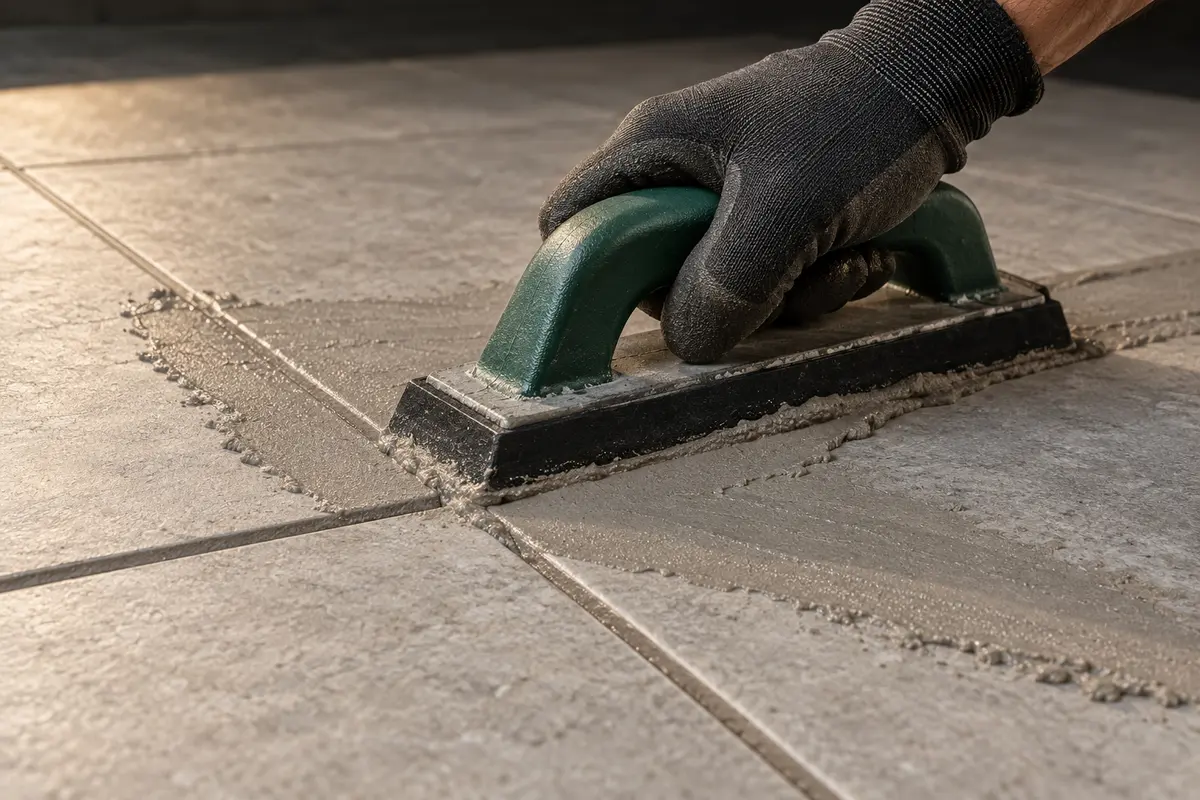
A little residue after installation and a joint that keeps shedding material are different observations. The first question is whether the grout itself is losing substance. A colourant or sealer may change appearance or care requirements, but it cannot supply the missing body of a joint.
Describe what is happening without damaging it
Photograph the affected lines and note whether you see a light surface dust, small pits, recessed areas or completely open sections. Record whether the material loss was visible immediately after installation or developed later.
You do not need a knife, screwdriver or wire brush to prepare this record. Aggressive probing changes the condition and can damage tile edges. If powder appears during normal gentle cleaning, note that observation and stop escalating the cleaning process until the material is assessed.
Look for the available product history
Ask for the grout brand, exact product, installation date and any previous repair information. Keep photographs of packaging, batch labels and leftover materials if available. “Grey grout” does not establish whether the original product was cement based, epoxy or ready to use.
The history should include unusual room conditions, early water exposure and cleaning products, without assigning blame. Missing information is useful to mark as unknown. It helps the assessor explain which conclusions are supported and which would require further investigation.
Understand why the exact material matters
For the cement grout described in CUSTOM's Polyblend technical sheet, adding water after mixing can weaken the material and affect its finish. That is one documented mechanism, not a remote diagnosis of every powdery joint.
The proposal should relate its explanation to the material actually present. Ask how the contractor distinguished superficial residue from compromised grout and whether the surrounding tile is suitable for the planned repair. A stronger replacement product is only part of that conversation.
Challenge a vague top-up proposal
Ask how replacement grout will obtain the depth and preparation its manufacturer requires. “We will skim over it” needs a product-specific explanation, especially when loose or deteriorated material remains underneath.
MAPEI's manufacturer FAQs distinguish cement-grout replacement from certain same-product touch-ups. There is no general permission to spread any new grout over any existing joint. Have the chosen method and its source instructions identified in the quotation.
Preparation also needs practical limits. Ask how tile edges will be protected and when the contractor would pause if removal reveals another concern. If spare tiles are unavailable, record that before work begins.
Choose a repair area that makes sense
A few isolated defects and widespread loss can lead to different scopes. Ask the assessor to map the affected joints, explain the proposed repair boundary and describe the likely appearance beside retained grout.
Request separate allowance and approval for damaged tile, hidden-condition investigation or a larger replacement area. Include cleanup, protection of the occupied home and care instructions. If the room is the only bathroom, discuss its downtime before selecting a date.
Review the finished joint and the handover
Agree on the repaired area and acceptable appearance before work. At completion, inspect it under normal room lighting and retain the product details. Ask when the surface can receive foot traffic, cleaning and shower water; these are separate uses with product-dependent requirements.
If material loss returns, the photographs and written scope help the next assessment move beyond another unexplained patch. The repair-or-regrout guide can help organize those options.
HAUSE editorial · Reviewed 9 October 2026. Use the current regional instructions for the exact products and assembly.
- Polyblend Sanded Grout — technical data sheet TDS-129 — CUSTOM Building Products
- UltraCare Grout Refresh — product and manufacturer FAQs — MAPEI