A useful grout project starts with a description of what has changed. “The shower looks tired” leaves several possibilities open. “The floor joints are intact but darker beside the door” gives an assessor something specific to investigate. Before choosing a product, separate your appearance goal from anything suggesting damage.
Describe the pattern
Take ordinary photographs of the whole surface and closer views of the affected joints. Record whether the concern is widespread, limited to one edge or returning in a previously repaired place. Note the installation age if known, any recent leak and the cleaners or coatings already used. You do not need to scrape a joint or lift a tile to prepare an inquiry.
Cracking deserves a closer review than colour alone. CUSTOM's technical FAQ identifies installation and substrate-related reasons for grout cracking. A photograph cannot establish which explanation applies to your floor. Ask what the assessor can confirm at the surface and what would require additional investigation. Manufacturer guidance
When cleaning is the right question
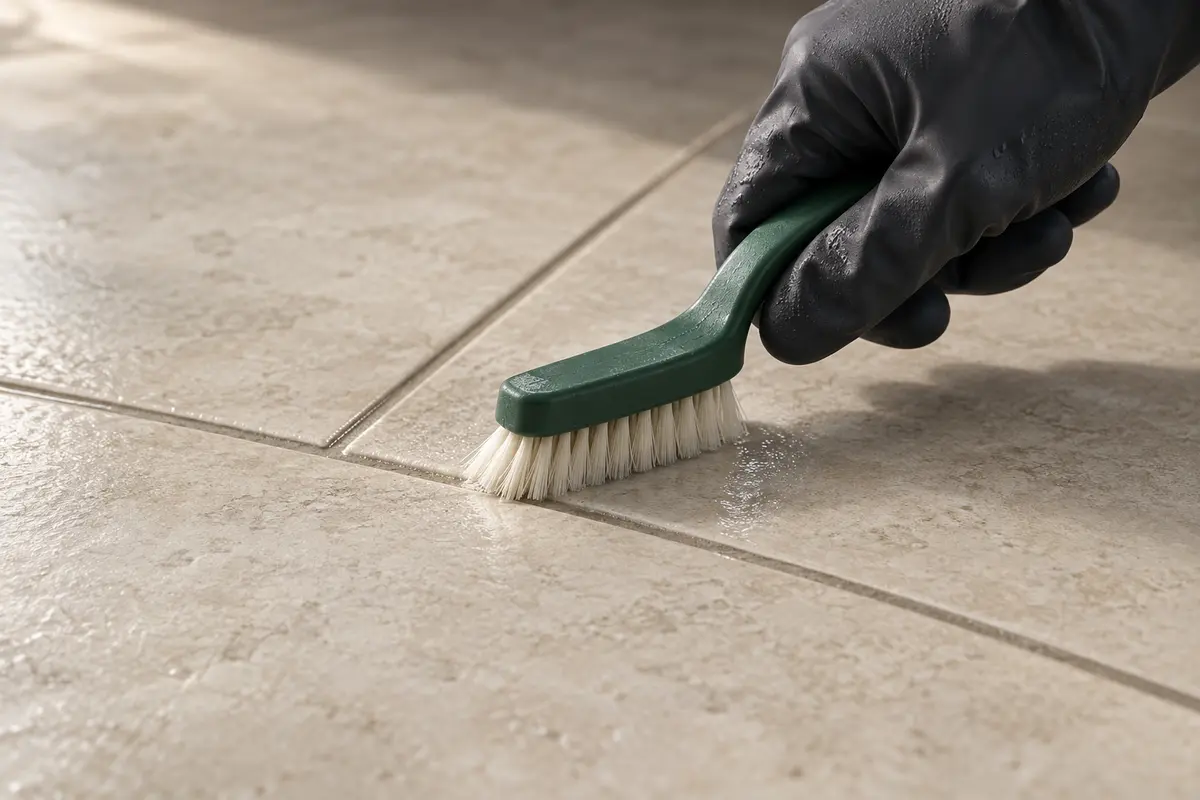
If your concern is appearance, ask whether a compatible cleaning trial would help establish the likely result. Confirm the tile material first, especially when it could be natural stone. A cleaner selected for one surface should not become the default for every room.
For routine soil, manufacturers offer non-acidic tile-and-grout cleaners; CUSTOM's TileLab cleaner is one example. Read the actual label and ask what finish is realistic before authorizing a full area. Do not treat a brighter test patch as evidence that missing or damaged grout has been repaired. Product technical sheet
When colour refresh is worth comparing
A grout colourant can be an option to discuss where the objective is a more consistent appearance on suitable existing joints. Ask to see the chosen colour beside your tile in the room's lighting. Include edges, thresholds and flexible sealant in that discussion so the finished scheme is intentional.
A colour treatment still needs a defined preparation and compatibility specification. For example, MAPEI distinguishes its colour-refresh product from regrouting, and identifies existing sealers as an adhesion issue. These are product-specific instructions, not a universal permission to coat any joint. Manufacturer questions and answers
When replacement needs a clearer scope
If grout is missing, cracked or repeatedly repaired, request a written explanation of the proposed preparation and replacement. Identify whether the work covers isolated joints, one wall, the whole shower or an entire room. Ask what happens if tile damage or an unsuitable underlying condition becomes apparent.
For a Calgary condo, include the property manager's available renovation instructions and practical access arrangements in your brief. For any home, identify the room's downtime and whether it is the only bathroom. End the assessment with a decision you can understand: the proposed outcome, the surfaces included, remaining uncertainty and the next approval required from you.
HAUSE editorial · Reviewed 9 October 2026. Use the current regional instructions for the exact products and assembly.
- Frequently Asked Questions: grout cracking — CUSTOM Building Products
- TileLab Grout & Tile Cleaner technical data sheet — CUSTOM Building Products
- UltraCare Grout Refresh manufacturer questions and answers — MAPEI