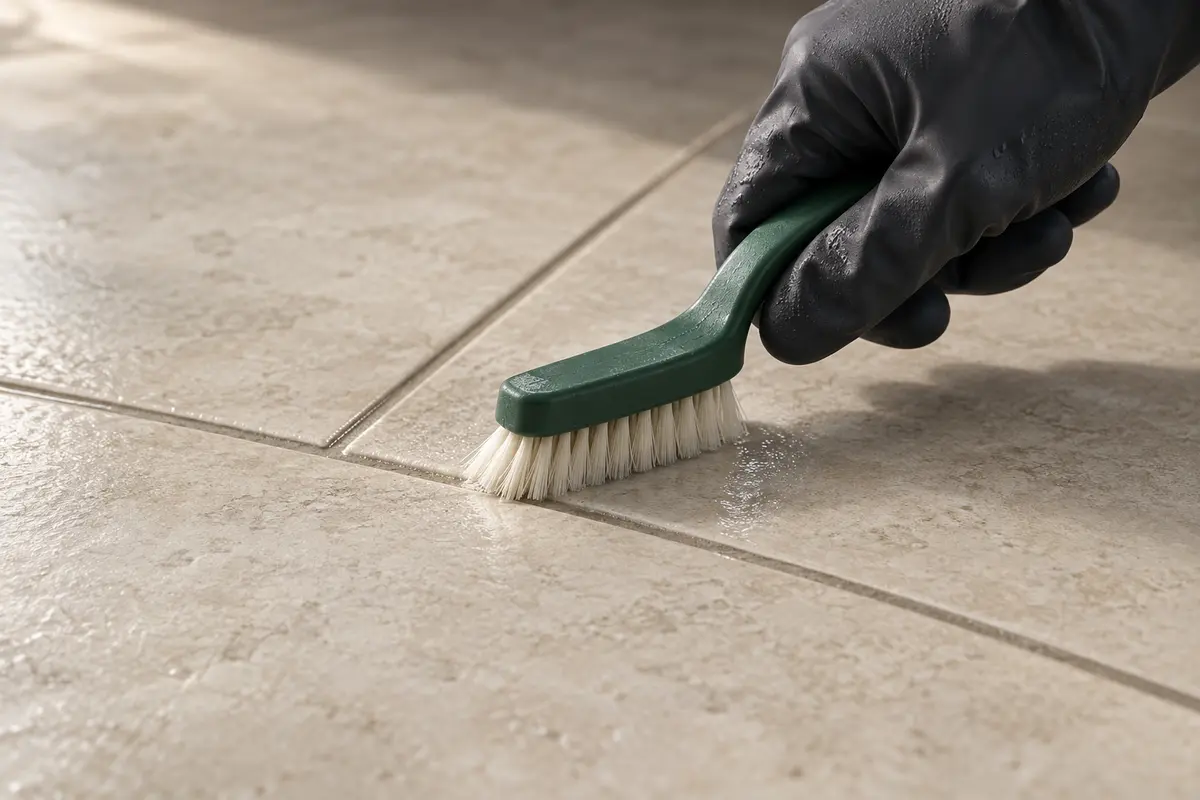
A grout-cleaning inquiry is useful when your main concern is appearance and the joints appear intact. Start by describing the surface and the change: darkening near an entry, residue beside a cooktop, or uneven colour across a bathroom floor. Those details help distinguish routine care from a project needing further assessment.
Check whether cleaning is the right scope
Include the tile material if known, the room, approximate area and products already tried. Report cracked or missing joints, loose tile and moisture concerns separately. Photographs can help explain the request, but they do not establish what a cleaner can safely remove.
A film on tile may need a different assessment from soil within grout. The grout-haze guide explains why cement and non-cement residues require different product decisions. For delicate finishes, review natural stone and glass compatibility.
Ask for a representative trial
A small approved trial helps set expectations before the whole area is treated. Ask who selects the compatible product, how adjacent finishes are protected and when the result will be reviewed after drying.
Define success in ordinary room lighting. Is the goal to remove visible soil, improve consistency or identify a limit that cleaning cannot overcome? Avoid treating an unusually bright patch as a promise that every joint will reach the same appearance.
Put the work in writing
A useful scope identifies:
- Each floor, wall, backsplash or other surface included.
- Preparation and any existing coatings that need assessment.
- The proposed cleaning process and protection of adjacent materials.
- Cleanup, room access and final care instructions.
Ask whether grout recolouring, sealer, flexible-joint work or damaged-tile repair is included. If any of these becomes advisable after the trial, request a separate explanation and approval.
Prepare the room and its history
Arrange access to the identified surfaces and tell the contractor about occupied-room constraints, pets and delicate nearby finishes. Keep product containers or photographs of their labels available. Do not apply another treatment immediately before the assessment.
The cleaning tutorial can help you understand the planning sequence. Any cleaning undertaken must follow the selected product's label; household chemicals should never be mixed.
Keep a useful completion record
Record the areas treated, products used, accepted appearance and any remaining concerns. Ask for care guidance that fits the actual tile and grout, including restrictions after any additional treatment.
A HAUSE inquiry starts a conversation about that scope. It does not establish installer availability, a quotation or a booking. If assessment indicates deterioration or an ongoing moisture issue, resolve that question before committing to a purely cosmetic result.
HAUSE editorial · Reviewed 9 October 2026. Use the current regional instructions for the exact products and assembly.
- TileLab Grout Haze Remover — technical data sheet TDS-141 — CUSTOM Building Products
- Aqua Mix Non-Cement Grout Haze Remover — CUSTOM Building Products
- Natural Stone Care and Cleaning — Natural Stone Institute
- Use household chemicals safely — Health Canada