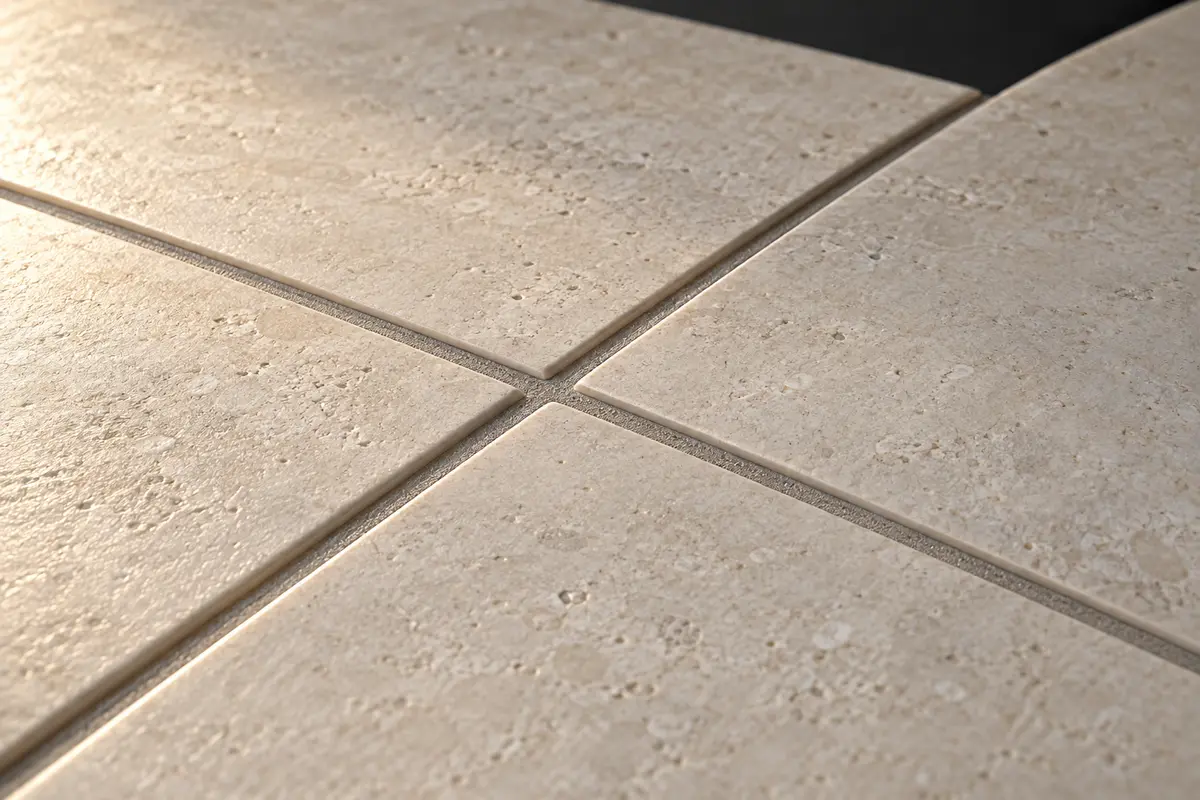
A newly tiled surface can look cloudy even when the grout joints themselves seem complete. The useful distinction is whether material remains on the tile or its finish has changed. Cleaning products are not interchangeable, and a persistent film is not a reason to increase chemical strength without identifying the surface and residue.
Locate the concern precisely
View the area in ordinary room light and with daylight where available. Is the cloudiness spread across tile faces, concentrated near joints, or visible mainly as streaks? Is there a raised residue or a change in sheen? Record these observations without scraping the tile.
Note the installation date, when final cleaning occurred and whether anyone has applied sealer, polish or colourant. A surface that looked clear before a later treatment has a different history from one that was cloudy from the start.
Find the grout name before the cleaner
Ask the installer for the exact grout product and its cleanup instructions. Cement residue and residue from other grout formulations may call for different compatible products.
CUSTOM's TileLab Grout Haze Remover is an acidic product for dried Portland-cement residue. The manufacturer excludes marble and polished stone and warns that some glazed tile can be etched. That example demonstrates why a bottle labelled for grout haze is not suitable for every tile.
Aqua Mix Non-Cement Grout Haze Remover instead targets certain premixed, urethane and light epoxy residues with a non-acidic formula. This distinction helps frame product selection; it is not an instruction to apply either example without checking the current label.
Protect the original finish
Identify stone, glass, metal trim, fixtures and any decorative inserts before selecting a process. A tiled wall can include several materials with different care needs.
The Natural Stone Institute warns that acids can etch susceptible stone and abrasives can scratch it. If a trial leaves a new dull patch or visible scratching, stop. That change needs assessment rather than another application of the same cleaner.
Ask a specialist to distinguish removable residue from etching, scratches or another finish problem when the answer is unclear. The proposed remedy may be different, and that difference should appear in the scope.
Make the trial measurable
A useful trial has a documented location, identified products and a defined acceptance condition. Compare the treated area after it has dried under the same lighting as the untreated area. Photograph both.
Ask whether the proposed process can reach textured recesses and whether it affects joint colour or surrounding finishes. Include protection, ventilation, cleanup and the timing allowed by the grout manufacturer. Do not substitute a generic online dwell time for the product instructions.
Keep cleaning chemistry controlled
Report everything already applied, including household mixtures. Do not mix cleaners or add bleach to another product. Health Canada's chemical guidance supports using products according to their labels and keeping incompatible chemicals separate.
A contractor should be able to explain the selected product, the materials it will contact and how residue will be removed. A promise to use something stronger is not that explanation.
Agree on completion
Specify whether the expected result is removal of visible residue, restoration work to a damaged finish, or further assessment. These are different deliverables. Keep the final care instructions with the original grout details so ordinary maintenance does not restart the problem.
HAUSE editorial · Reviewed 9 October 2026. Use the current regional instructions for the exact products and assembly.
- TileLab Grout Haze Remover — technical data sheet TDS-141 — CUSTOM Building Products
- Aqua Mix Non-Cement Grout Haze Remover — CUSTOM Building Products
- Natural Stone Care and Cleaning — Natural Stone Institute
- Use household chemicals safely — Health Canada